Contact Paper: How to Apply It & Does It Hold Up?
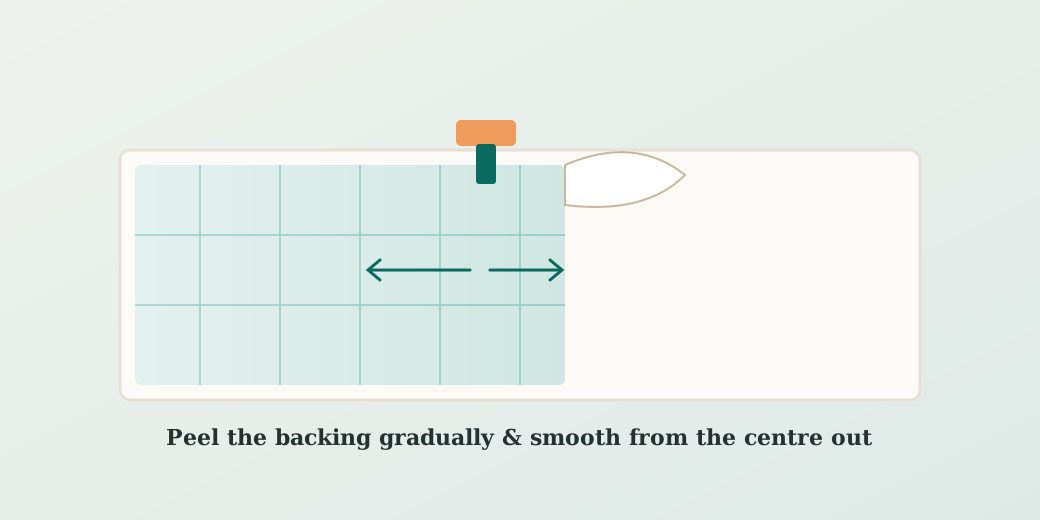
▲ Illustration — peel the backing a little at a time and smooth from the centre outward to avoid bubbles.
Contact paper (self-adhesive vinyl film) sticks to any smooth, clean, dry surface — counters, cabinets, shelves. Apply it by peeling the backing gradually and smoothing from the centre out. It's heat- and water-resistant, not proof (use trivets and cutting boards), it's a temporary, budget refresh rather than a granite replacement, and it removes from most surfaces without damage when you peel carefully (warm stubborn spots with a hair dryer).
Guidance is compiled from the film maker's application tips and a reputable home-improvement source, cited in Sources.
What contact paper is good for
Contact paper is a thin self-adhesive vinyl film used to reface surfaces cheaply: kitchen counters, cabinet doors and fronts, shelves and drawers. Its appeal is that it's removable and renter-friendly — a quick visual update without paint, tools or a landlord's permission. The honest framing up front: it's a temporary, decorative fix, not a work surface that competes with stone or laminate.[3]
How to apply contact paper without bubbles
Clean and dry the surface
Wipe it clean and let it dry fully. Contact paper grips only a smooth, clean, dry surface — grease or dust stop it sticking.[3]
Measure and cut
Measure the area and cut to fit using the grid printed on the backing paper, a ruler and a utility knife or scissors; leave a little extra to wrap edges.[1]
Peel the backing gradually
Don't strip all the backing at once. Peel a small section at a time and work forward centimetre by centimetre — this is the single biggest bubble-avoider.[1]
Smooth from the centre outward
Press the film with a scraper from the centre toward the edges to push out air. For a trapped bubble, prick it with a fine needle and press the air out.[1]
Trim, and reposition while you can
Trim the edges. Full adhesion takes several hours to develop, so on most surfaces you can lift and reposition the film while you work. For curved edges, warm the film with a hair dryer on low to make it pliable.[1]
On countertops: what it can and can't take
Counters are the most popular use — and the one with the clearest limits. The widely used d-c-fix film is heat-resistant to about 170 °F (77 °C) and water-resistant, but that is not heatproof or waterproof.[2] In practice:
- Never set hot pots or pans directly on it — use trivets.[2]
- Always use a cutting board — it tears or cuts if you work directly on it.[2]
- Avoid abrasive cleaners and scrubbing pads.[2]
- Seal the edges well, especially near the sink, so water can't creep underneath and lift it.
On cabinets and shelves
Cabinet doors, fronts and shelf liners are an easier job than counters — less heat and water, and flatter surfaces. The same rules apply: a smooth, clean, dry, non-porous face (sealed wood, melamine or laminate) holds best, and the gradual-peel, smooth-from-centre method still prevents bubbles. Wrap door edges with the hair-dryer trick so corners don't lift.
Does it damage cabinets or counters?
This is the renter's real question, and the reassuring answer is no — when removed carefully. Contact paper "can be safely removed from most surfaces—like wood, laminate, quartz, and granite—without damage when done carefully."[2] The damage stories come from yanking old, heat-baked film off in a hurry, which can lift finish. Remove it the gentle way instead (next section).
How to remove contact paper
Peel from one corner and pull back slowly at a low angle. If the adhesive won't give, warm the surface with a hair dryer to soften it, then continue; wipe away any residue with a mild cleaner.[2] Patience and a little heat are what keep the surface underneath intact.
Doing a backsplash or tile instead?
If you're refacing a wall rather than a counter, our peel-and-stick tile guides cover prep, seams and cutting.
Affiliate disclosure: HowToApplyNow may earn a commission from qualifying purchases made through links on this page, at no additional cost to you. Products are added only after we vet the program and the terms — and only when a specific product's own instructions support their use for this task.
FAQ
Does contact paper damage cabinets or countertops?
Not when it's removed carefully. Contact paper can be safely removed from most surfaces — wood, laminate, quartz and granite — without damage; peel from a corner, and if the adhesive resists, warm it with a hair dryer to loosen it. The risk is pulling hard on old, sun-baked film, which can lift finish, so heat it first.
How do you apply contact paper without bubbles?
Work on a clean, dry surface, peel only a small section of the backing at a time, and smooth with a scraper from the centre outward as you go. If a bubble is trapped, prick it with a fine needle and press the air out. Because full adhesion takes several hours, you can usually reposition the film while you work.
Is contact paper heat-resistant and waterproof on a countertop?
It's heat- and water-resistant, not heatproof or waterproof. The d-c-fix brand is rated heat-resistant to about 170 °F (77 °C) and water-resistant, but you shouldn't place hot pots or pans directly on it, should use cutting boards and trivets, and should avoid abrasive pads.
How long does contact paper last on a countertop?
Treat it as a temporary, budget fix rather than a permanent surface. It can peel at the edges, bubble, or tear if scraped or cut, and it isn't meant to compete with granite or quartz — it's best for rentals, short-term updates, or a stopgap before a full renovation.
What surfaces does contact paper stick to?
Smooth, clean, dry, non-porous surfaces — laminate counters, sealed wood or melamine cabinets, shelves, and similar. It won't hold well on rough, dusty, greasy or porous surfaces. For curved edges, warming the film with a hair dryer on low makes it pliable enough to wrap.
Sources
Research-first: the film maker's own application tips for the method, and a reputable home-improvement source for the heat/water limits, durability and removal. Heat/water figures are given as the manufacturer states them, not as guarantees.
- d-c-fix — Application tips for adhesive films — manufacturer (peel backing gradually, centimetre by centimetre; smooth with scraper from centre; prick bubbles with a fine needle; full adhesion over several hours; hair dryer for curves). d-c-fix.com
- Bob Vila — Updating kitchen countertops with contact paper (d-c-fix heat-resistant ~170 °F + water-resistant; no hot pans direct; use trivets/cutting boards; temporary; removes from most surfaces without damage; hair-dryer removal). bobvila.com
- d-c-fix — FAQ & useful information — manufacturer (smooth, clean, dry surface requirement; suitability). d-c-fix.com
Manufacturers don't publish a single lifespan figure, so durability is described directionally ("temporary"), and the heat/water ratings are attributed to d-c-fix rather than generalised to every brand. Sources last reviewed: September 2026.