How to Remove Contact Paper Cleanly (Without Damaging the Surface)
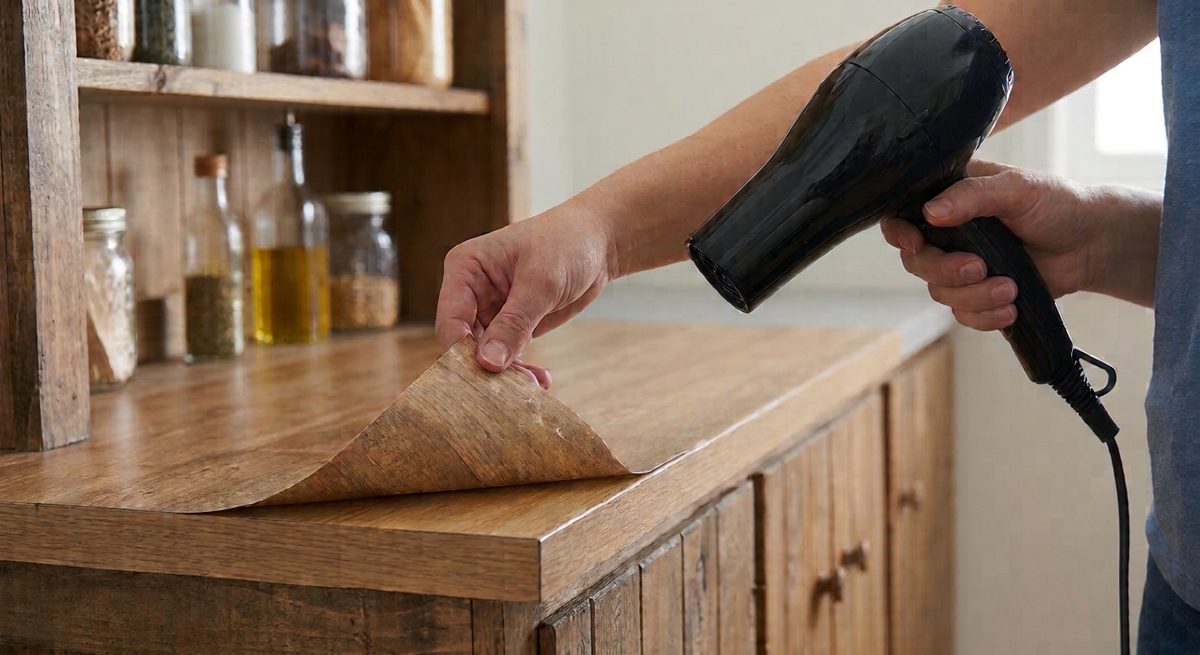
The reliable way to remove contact paper is heat and patience, not force. Warm the film with a hair dryer or heat gun on medium, starting at one corner, then peel slowly while you keep heating — the longer you warm it, the looser the adhesive gets. Scrape or use an adhesive remover for residue, then wipe with mild soapy water and dry. Done this way it removes from most surfaces — wood, laminate, quartz, granite — without damage.
Guidance is compiled from the film maker's tips and reputable home-improvement sources, cited in Sources.
- Heat first — a hair dryer or heat gun softens the adhesive so it releases cleanly.[4]
- Peel slowly from a corner while heating — don't yank it.[3][4]
- Wallpaper remover won't work — contact paper is water-resistant.[4]
- For residue: scrape or use an adhesive remover, then soapy water.[4]
- Test a hidden spot first on older paint, stain or varnish.[4]
Can contact paper be removed without damage?
Yes — in most cases. Because contact paper is self-adhesive vinyl (not glued like wallpaper), it peels off once the adhesive is softened. Bob Vila notes it "can be safely removed from most surfaces... without damage when done carefully," and that warming stubborn spots with a hair dryer helps release them.[3] The two things that cause damage are rushing and older film whose adhesive has cured harder. Go slow, add heat, and test first on delicate finishes.[4]
What you'll need
- A hair dryer or heat gun
- A plastic scraper or an old gift card
- An adhesive remover (citrus-based or commercial)
- A soft cloth, mild dish soap and warm water
- Gloves and eye protection if you use a chemical remover[4]
Step 1 — Warm the film with heat
Set a hair dryer or heat gun to a medium setting and hold it a few inches above the paper. Start at one corner and work diagonally across the piece for a minute or two.[4] Heat is what makes this clean: "the longer you heat it, the looser the adhesive will be."[4]
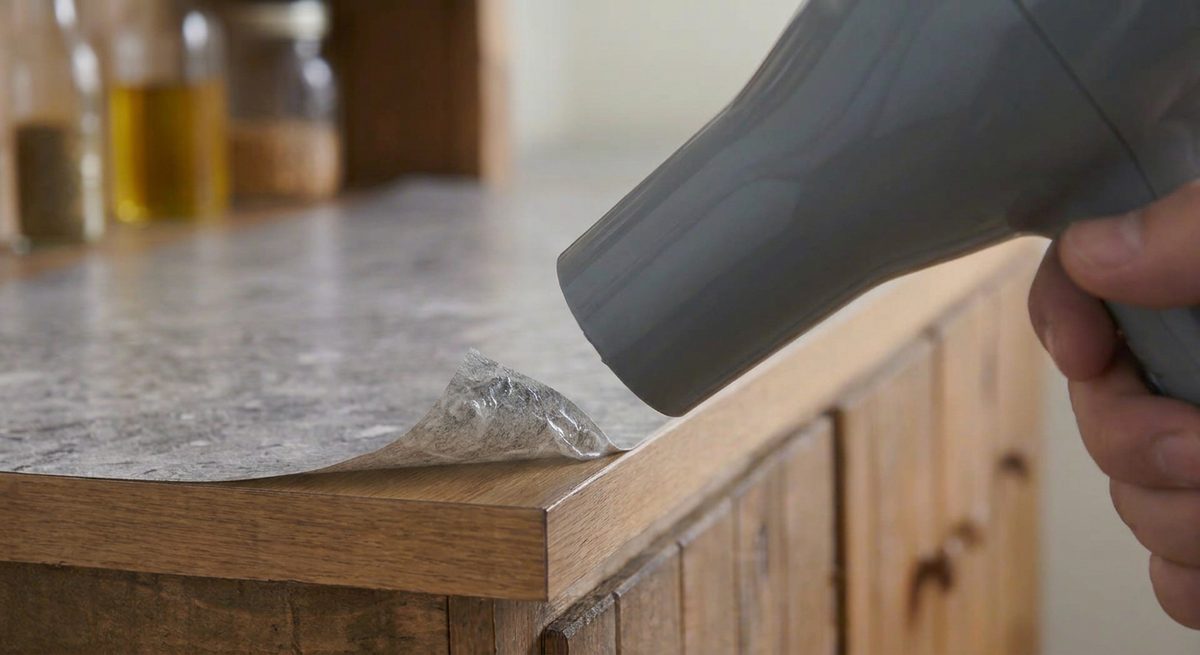
Step 2 — Peel slowly from a corner
Lift a warmed corner and pull the film back slowly and steadily, keeping the heat moving just ahead of where you're peeling.[3][4] If it tears or resists, stop and add more heat rather than forcing it — forcing is what pulls up paint or wood fibers.
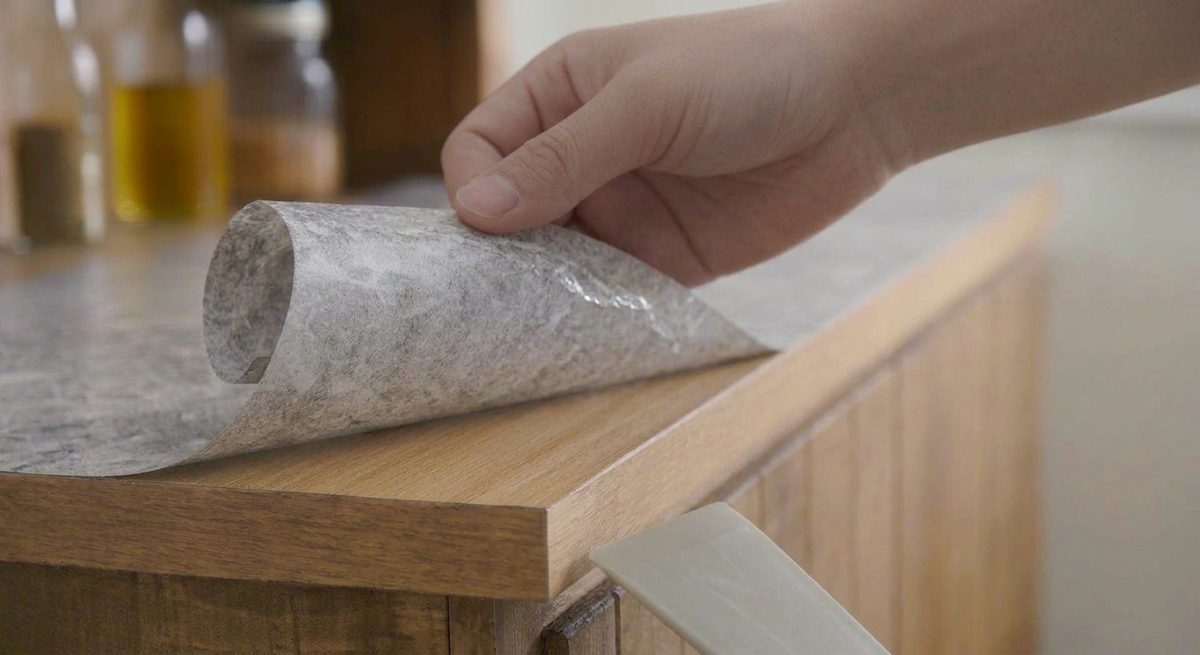
Step 3 — Remove any adhesive residue
Some film leaves a sticky layer behind. Scrape it gently with a plastic scraper, or scrub it with an adhesive remover.[4] If you use a chemical remover, "check the label for specific instructions," and wear gloves or goggles as directed.[4] A citrus-based remover is a gentler first choice on finished surfaces. Don't use wallpaper remover — it won't work, because contact paper is water-resistant.[4]
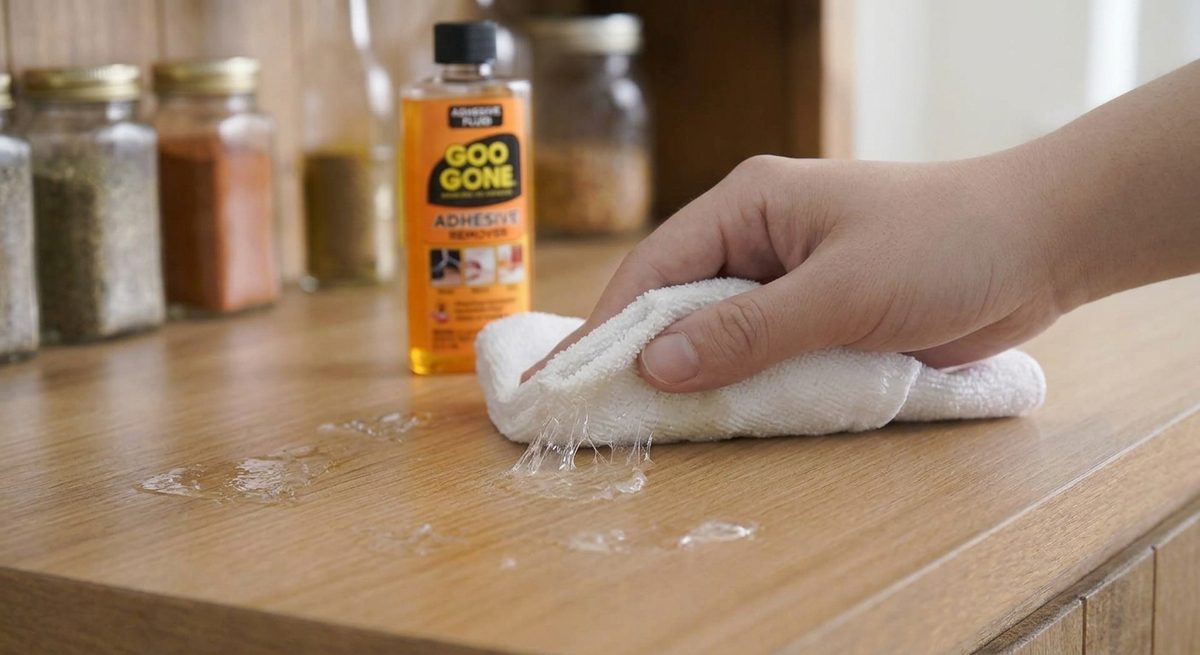
Step 4 — Clean and dry
Finish by wiping the surface with a cloth dipped in warm, mild soapy water, then dry it with a towel.[4] This lifts the last of the remover and residue so the surface is ready to re-cover or leave bare.
Removing contact paper by surface
- Wood (shelves, furniture): Heat and peel works well, but test an inconspicuous spot first — heat, removers and soapy water can affect paint, stain or varnish.[4]
- Laminate counters and cabinets: Among the most forgiving — smooth, sealed laminate releases film cleanly with heat, and residue wipes off with adhesive remover.[3]
- Metal drawers and appliances: Heat softens the adhesive the same way; a plastic scraper avoids scratching the finish.
- Painted walls: The riskiest surface — paint can lift with the film. Use the lowest heat that works, peel very slowly, and expect to touch up paint on flat or fresh finishes.
- Old, stubborn contact paper: Aged adhesive grips harder. Work in small sections with sustained heat; repeated passes beat brute force.
FAQ
Does contact paper leave residue when removed?
Sometimes. Any sticky residue scrapes off with a plastic scraper or lifts with an adhesive remover, followed by warm soapy water.[4]
Will removing contact paper damage my walls or wood?
Usually not, when you heat it and peel slowly — it comes off most surfaces without damage.[3] Painted walls are the exception and can lift; test a hidden spot first on any delicate finish.[4]
How do you remove old contact paper that won't come off?
Aged adhesive needs more heat. Warm it longer with a hair dryer or heat gun — "the longer you heat it, the looser the adhesive will be" — and peel in small sections.[4]
What's the best adhesive remover for contact paper residue?
A citrus-based or commercial adhesive remover works; follow the label and wear gloves/goggles if directed.[4] Avoid wallpaper remover — it won't work on water-resistant contact paper.[4]
Can you reuse contact paper after removing it?
Generally no — once peeled, the adhesive picks up dust and the film creases, so it rarely re-adheres cleanly. Plan to replace it.
Does a hair dryer or heat gun work better?
Either works. A hair dryer is gentler and fine for most jobs; a heat gun is faster on large or stubborn areas but runs much hotter, so keep it moving to avoid scorching the surface.[4]
Sources
Research-first: the film maker's own tips plus reputable home-improvement sources for the heat-and-peel method, residue removal and surface cautions.
- d-c-fix — Application tips for adhesive films (repositionable while curing; hair dryer for shaping). d-c-fix.com
- d-c-fix — FAQ & useful information (surface requirements). d-c-fix.com
- Bob Vila — Contact paper removes from most surfaces without damage; hair dryer to loosen. bobvila.com
- Hunker — How to remove contact paper from wood (heat method, residue, wallpaper remover won't work, test finishes, PPE). hunker.com