Can You Use Peel-and-Stick Tile in a Shower?
▲ Illustration — e.g. peel-and-stick tile on a bathroom wall beside (not inside) the shower.
Usually, no — unless the specific peel-and-stick tile manufacturer explicitly approves that exact product for shower walls, and the wall already has an appropriate waterproofing system behind it. Many peel-and-stick tiles are water-resistant, not waterproof, and the tile itself should not be treated as the shower's waterproofing layer. So the safe answer depends on your exact product and wall — not on "peel-and-stick tile" in general. Away from direct spray, it's a good fit for bathroom walls and backsplashes.
What each brand actually allows
There is no single industry answer — it splits by brand, and some are describing their own products with a sales incentive. Here's what their own FAQs and product pages say:
| Brand / product | Shower wall? | What the company says | Our note |
|---|---|---|---|
| Smart Tiles | ❌ No | Not recommended in direct water; suits bathroom heat/humidity[1] | Bathroom ≠ shower |
| Tic Tac Tiles | ❌ No | "Water-resistant … not waterproof"; not for shower stalls[2] | Not for the wet zone |
| StickGoo | ⚠️ Some products | Certain thick lines marketed "for shower"; thin line banned there[3] | Check the specific SKU; no membrane step stated |
| Yipscazo | ⚠️ Conditional | Only if the substrate is waterproofed first + 100% silicone-sealed + thick tile[4] | Manufacturer's own claim |
| MusselBound | ⚠️ Different product | Rated for shower walls — but it's an adhesive mat that holds real tile[5] | Not peel-and-stick vinyl tile |
Water-resistant is not the same as waterproof
This distinction is the whole answer. Tic Tac Tiles put it plainly: their tile is "water resistant but unfortunately not waterproof."[2] As Stickwoll explains, the material can repel water while the system of interconnected tiles is not impenetrable — "the tiles are water-resistant, but the system of interconnected tiles is not truly waterproof."[7]
The vulnerable spot is the seams. Because peel-and-stick uses no grout or cement backer board, water can work into the joins. This Old House notes "the greatest concern is for the spaces where one tile meets the other … that leaves a tiny vulnerable space for water," and that constant water contact will damage the tiles over time.[6]
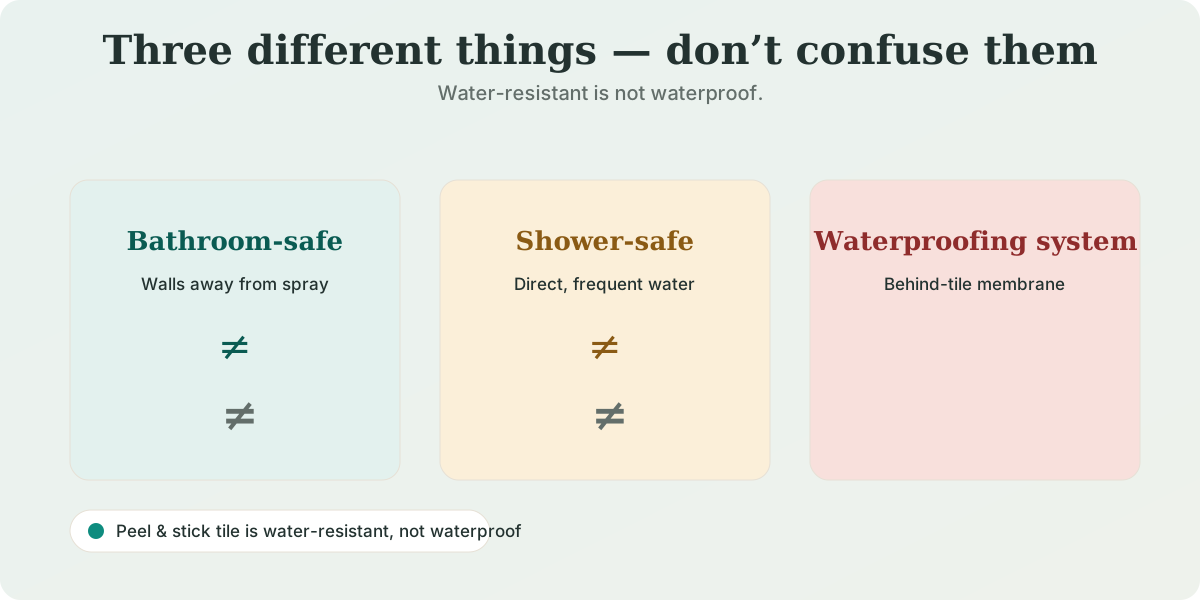
Bathroom-safe ≠ shower-safe ≠ waterproofing system
Three different things get blurred together in "is it OK for a bathroom?" Keeping them separate is the whole decision:
- Bathroom-safe — handles humidity and the occasional splash. Most peel-and-stick tile qualifies for walls kept away from direct spray.
- Shower-safe — survives direct, repeated water on a shower wall. Only specific products, and only with the conditions their makers spell out (thick tile, waterproofed wall, sealed edges).
- A waterproofing system — keeps water out of the wall itself. That's the membrane or backer behind the tile, and it is never the tile alone.
A tile can be bathroom-safe and still be wrong for a shower; and a shower wall still needs its own waterproofing regardless of what tile goes on top.
The brands that say no
Smart Tiles is explicit: the tiles are "designed to withstand heat and humidity, making them suitable for bathrooms. However, it is not recommended to use them directly in the shower or bathtub, where they would be exposed to large amounts of water."[1] Tic Tac Tiles say the same — fine for bathroom humidity, "not recommended to install … where they will be in direct contact with water (e.g. shower stalls)."[2]
The brands that allow it — and their conditions
Two brands say yes, but read the fine print, and note they're describing their own products:
- StickGoo permits its thick line ("especially design for shower") while its thin line is banned in the shower.[3] Caution: this claim appears on an FAQ with no requirement for a waterproofing layer behind the tile, which conflicts with everyone else below.
- Yipscazo allows it "only under specific conditions": the surface must be waterproofed before installation, corners sealed with 100% silicone caulk, a thick tile used, and it still cites a shorter 5–10 year lifespan.[4]
- MusselBound is a different product class — an adhesive mat that holds real tile, not a finished vinyl tile. It's rated for shower walls but "not for use in submerged applications like … shower floors."[5] Don't read "MusselBound works in showers" as "vinyl peel-and-stick tile works in showers."
The rule they all share: the tile is not the waterproofing
Even the brands that permit shower use don't treat the tile as the waterproof barrier — the wall behind it must be. Yipscazo requires the substrate be waterproofed first;[4] MusselBound sells a dedicated seam-tape system to waterproof behind real tile.[5] This matches the industry principle for any tiled wet area: tile coverings "are not inherently waterproof … and must be installed in conjunction with a waterproofing system."[8]
Heat and steam
Bathrooms get hot as well as wet. The brands that state a limit cap the surface temperature at 49 °C (120 °F) — Smart Tiles, StickGoo and Tic Tac Tiles all use that ceiling.[1][3][2] None of them publishes a separate steam rating, so treat a steam shower as more demanding than a standard bathroom, not less.
Where peel-and-stick tile is a good fit
Away from direct water, it's genuinely well suited to bathrooms: Smart Tiles are made for bathroom heat and humidity,[1] and This Old House confirms "you can use peel-and-stick tiles in bathrooms but not in the shower."[6] Stickwoll specifically recommends it "for a low-moisture bathroom wall" and to avoid "a main, daily-use shower."[7] Good uses: a backsplash, the wall around a sink, or a bathroom accent wall that only sees splashes and humidity. Surfaces must be smooth, clean and non-porous — brands rule out stucco, brick and unfinished drywall.[3][2]
Bottom line
For a daily-use shower or tub surround, the reliable choice is traditional tile over a proper waterproofing membrane — most peel-and-stick makers say their product isn't for direct, constant water. If you still want the look near water, the minimum the permitting brands require is a thick tile, a waterproofed wall, and every edge sealed with 100% silicone — and even then, expect a limited lifespan. For everything short of the wet zone — backsplashes, sink walls, humid bathroom walls — it's a good, low-commitment option.
What you may need
For a bathroom install away from direct spray, or for edge-sealing where your product's instructions call for it, you may need a smoothing tool, a suitable surface cleaner, and a manufacturer-approved sealant (often 100% silicone) for the perimeter.
- Smoothing tool / squeegee
- Surface cleaner (per manufacturer)
- Manufacturer-approved sealant (e.g. 100% silicone)
Affiliate disclosure: HowToApplyNow may earn a commission from qualifying purchases made through links on this page, at no additional cost to you. Products will only be added once we've vetted the affiliate program and its terms — and only when a specific product's own instructions support their use for this task.
FAQ
Can you put peel-and-stick tile in a shower?
Usually not — unless your specific tile is approved by its maker for shower walls and the wall already has a proper waterproofing system behind it. Peel-and-stick tile is generally water-resistant, not waterproof, and it is not itself the waterproofing layer.
Is peel-and-stick tile waterproof?
Brands describe it as water-resistant, not waterproof. Tic Tac Tiles state it is "water resistant but unfortunately not waterproof." Individual tiles repel water, but the seams between them are not a waterproof system.
Can peel-and-stick tile go on a bathroom wall?
Yes — most makers say it suits bathroom humidity and splash zones such as walls and backsplashes, as long as it's kept away from direct, constant water like the shower spray.
What if I install it near water anyway?
At minimum use a thick tile, waterproof the wall first, and seal every edge and corner with 100% silicone. Expect a limited lifespan; brands that permit it cite roughly 5–10 years, and none treat the tile itself as the waterproofing layer.
Does it handle the heat of a bathroom?
The brands that state a limit cap the surface temperature at 49 °C (120 °F). None publishes a separate steam rating, so treat a steam shower as more demanding than a normal bathroom.
Does peel-and-stick tile grow mold in a shower?
The risk isn’t the tile itself but water getting behind it. Because these tiles are water-resistant, not waterproof, and are not a waterproofing system, water that works through the seams in the wet zone can sit against the wall and encourage mold — which is part of why makers keep them out of the direct-spray area. Keep it clear of the wet zone, seal every edge, and make sure the wall behind is already a proper waterproofed substrate.
Can you put peel-and-stick tile over existing tile in a shower?
On a smooth, clean, dry wall you can apply it over existing tile — but a shower adds two problems: the grout lines between the old tiles leave an uneven surface the film bridges poorly, and it’s still the wet zone the makers advise against. If you do it outside the splash area, level the grout lines first. See peel-and-stick tile over existing tile.
Sources
Research-first: primary manufacturer sources first; two reputable secondary sources are labeled where used.
- Smart Tiles — FAQ (suitable for bathroom heat/humidity; not directly in shower/tub; 49 °C surface cap). thesmarttiles.com/en-us/pages/faq
- Tic Tac Tiles — FAQ (water-resistant not waterproof; not for direct water / shower stalls; 120 °F cap; suitable surfaces). tictactiles.com/a/faq
- StickGoo — FAQ (thick version marketed for shower; thin version not; 49 °C cap; smooth non-porous surfaces). stickgoo.com/pages/faqs — brand claim; note no waterproofing-membrane step stated.
- Yipscazo — "Peel-and-stick tiles in a shower" guide (conditional yes: substrate waterproofed first + 100% silicone corners + thick tile; ~5–10 yr). yipscazotile.com — manufacturer blog, part marketing.
- MusselBound — Waterproofing system / seam tape (adhesive mat for real tile; shower walls yes, not floors/submerged). shop.musselbound.com
- This Old House — Peel-and-stick tile guide (bathrooms yes, shower no; seams are the water vulnerability). thisoldhouse.com — secondary, reputable.
- Stickwoll — Peel & stick shower tiles article (water-resistant vs waterproof at system level; seams; low-moisture wall yes, daily-use shower no). stickwoll.com — brand/retailer article.
- Schluter — Shower System handbook (tile is not inherently waterproof; requires a waterproofing system). schluter.com — industry principle.
Where brands disagree (permit vs prohibit shower use), the disagreement is shown rather than resolved, and brands describing their own products are flagged. Sources last reviewed: August 2026.