Can Peel-and-Stick Tile Go on Textured Walls?
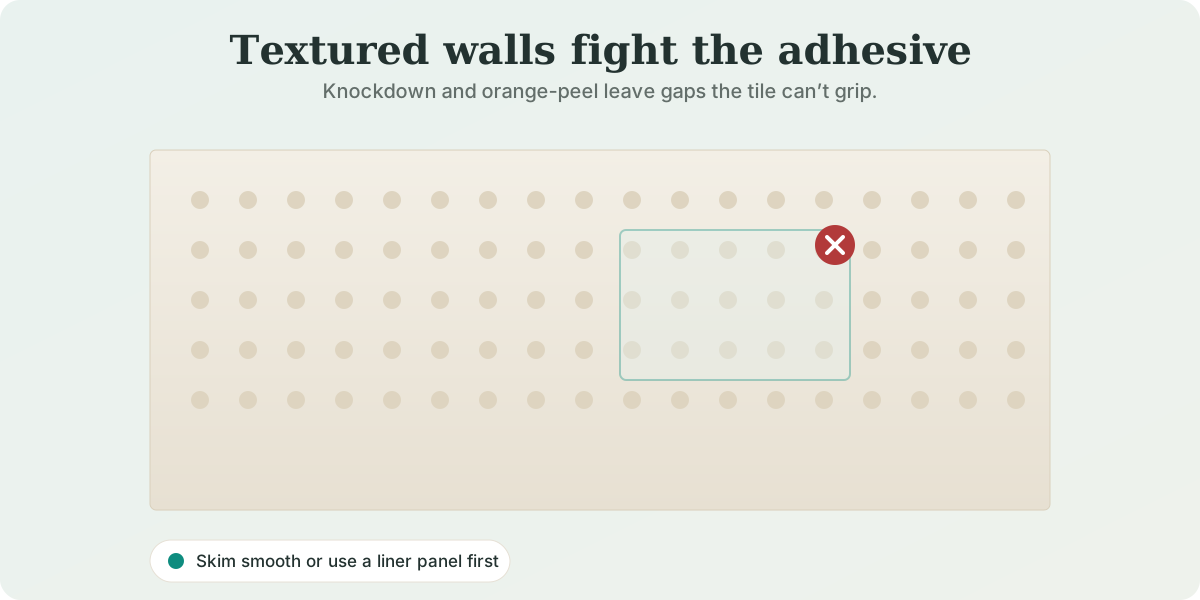
▲ Illustration — a textured (orange-peel) wall next to a smoothed, skim-coated section.
Generally, no. Manufacturer spec sheets require a smooth, flat wall and list textured surfaces (orange peel, knockdown, popcorn, stucco, brick) as unsuitable, because the adhesive only touches the high points and the tile lifts. A few seller guides say very light “soft” orange peel can work with prep — treat that as a best case, not the rule. The reliable route is to smooth the wall first (skim-coat, sand, prime) or use a smooth backing panel. Bare or porous walls are a no.
Guidance is compiled from manufacturer installation guides and FAQs, and cited in Sources. Some links may be affiliate links (policy).
What the manufacturers' spec sheets say: smooth only
On their formal FAQ and installation pages, the major brands are consistent — peel-and-stick tile needs a smooth, flat surface, and textured walls are on the "do not apply" list:
- Smart Tiles: applied "to a smooth, even, clean, and dry surface"; textured walls are prohibited because "textured or uneven surfaces … do not allow Smart Tiles to adhere optimally."[1]
- StickGoo: tiles "cannot adhere properly to a textured surface," and it's "not recommended … on an 'orange peel' painted surface."[2]
- Tic Tac Tiles: "best suited for untextured, flat, and even surfaces"; do not apply on "Orange peel texture, Brick, Stone, Gypsum, Stucco, Plywood."[3]
- Aspect: substrates must be "clean, flat, smooth, dry" and "not porous or textured."[4]
Why texture breaks the bond
The adhesive can only touch the high points of a textured wall, leaving air gaps under the valleys — so tiles bubble, lift at the edges, and fall. Smart Tiles states texture and relief "do not allow … optimal" adhesion;[1] seller guides use the tape analogy: "the tape only touches the high points, leaving gaps."[8]
The "light texture is fine" nuance — read it carefully
Some sources are more permissive, but note who is saying it. Manufacturer blog posts — which are marketing — grade soft textures as workable: Commomy says "Soft Orange Peel" and "Soft Knockdown" "can work" while popcorn does not;[6] Colamo says light/medium orange peel is workable with prep.[7] StickGoo claims its thick line "can be install on … textured walls," which contradicts its own thin-tile rule and isn't qualified by how deep the texture is.[2] WallPops' FAQ even contradicts itself — listing textured walls as "not recommended" while also saying they "can still be successfully installed … if not excessively porous or uneven."[5]
How to make a textured wall work
The reliable path is to give the tile a smooth surface:
- Skim-coat the wall with joint compound or spackle to fill the texture, then sand smooth.[6]
- Prime and let the primer cure fully; then clean/degrease before tiling.[2][4]
- For heavy texture, Yipscazo suggests a smooth backing panel (e.g. thin plywood) as the new surface.[8]
- If the wall was freshly painted, wait out the cure (about 21 days) before applying.[6]
Bare, porous and masonry walls: no
Every spec-sheet brand rules out unpainted drywall, brick, cinderblock, stone, stucco and bare plywood — they're too porous or rough for the adhesive. Paint or prime and let it cure first.[1][2][3]
What you may need
To smooth a textured wall for tiling you'll typically need joint compound or spackle, a sanding block, primer, and a smoothing tool.
- Joint compound / spackle
- Sanding block or pole sander
- Primer (per your product)
- Smoothing tool / squeegee
Affiliate disclosure: HowToApplyNow may earn a commission from qualifying purchases made through links on this page, at no additional cost to you. Products are added only after we vet the program and the terms — and only when a specific product's own instructions support their use for this task.
By texture type: what usually works
Manufacturers spec a smooth wall, so everything below is workaround territory — do a small test patch first, and see the install guide for prep steps.
- Light / soft orange peel: often workable with prep — clean, then skim or sand the grain and prime.[6][7]
- Knockdown: heavier; needs real smoothing — a skim coat, or sanding (around 120-grit) plus a TSP clean and primer — before tile will hold.[7]
- Popcorn / heavy texture: not suitable as-is; the peaks-and-valleys surface touches the tile only at high points, so skim-coat it flat or mount a smooth backing panel first.[6][8]
- Bare drywall, brick, stone, stucco: no — too porous or uneven; these are on the manufacturers do-not list.[1][3]
FAQ
Can peel-and-stick tile go on textured walls?
Manufacturer spec sheets say no — they require a smooth, flat surface and list textured walls as unsuitable, because the adhesive only contacts the high points and the tile lifts.
What about light orange peel?
Some manufacturer blogs (marketing) say soft orange peel or soft knockdown can work with prep, and StickGoo claims its thick line tolerates texture. The strict spec-sheet brands would still reject it. Treat light-texture claims as a best case, and smooth the wall if in doubt.
How do I make a textured wall usable?
Skim-coat with joint compound or spackle, sand smooth, prime and let it cure, then clean before tiling. For heavy texture, use a smooth backing panel.
Can I tile over bare drywall or brick?
No — unpainted drywall, brick, cinderblock, stone and stucco are too porous or rough. Paint or prime and let it cure first.
Do peel and stick tiles work on textured walls?
Not as designed. Smart Tiles, Tic Tac Tiles and Aspect all spec a smooth, flat, even wall. Light orange peel can work after you smooth and prime it; heavier knockdown or popcorn texture needs a skim coat or a smooth backing panel first. Always test a small patch before committing.
What about knockdown or popcorn texture?
Knockdown can be made to work with a skim coat, or sanding (about 120-grit) plus a TSP clean and primer. Popcorn and heavy texture are not suitable as-is — skim-coat the wall flat or mount a smooth backing panel, because otherwise the tile only touches the high points and lifts.
Sources
Research-first: manufacturer spec/FAQ pages are separated from manufacturer blog posts (marketing), which are labeled as such.
- Smart Tiles — FAQ (smooth/even surface required; textured wall, unpainted drywall, brick, stone prohibited; mechanism). thesmarttiles.com
- StickGoo — FAQ (thin tiles cannot adhere to textured/orange-peel; thick-line texture claim; sand-smooth + prime workaround). stickgoo.com
- Tic Tac Tiles — FAQ ("untextured, flat, and even"; do-NOT list: orange peel, brick, stone, gypsum, stucco, plywood). tictactiles.com
- Aspect — FAQ / install (clean, flat, smooth, dry; "not porous or textured"; repair/patch/level/prime uneven areas). aspectideas.com
- WallPops — FAQ (best on smooth/flat; textured "not recommended" yet "can still be installed if not excessively porous or uneven" — internal contradiction). wallpops.com
- Commomy — Textured-wall blog — brand blog (soft orange peel / soft knockdown "can work"; popcorn unsuitable; skim-coat prep). commomy.com
- Colamo — Textured-wall blog — brand blog (light/medium orange peel workable with prep; 120-grit + TSP for knockdown). colamo.net
- Yipscazo — Textured-wall blog — brand blog (peaks/valleys tape analogy; plywood backing panel for heavy texture). yipscazotile.com
Spec sheets prohibit texture; seller blogs allow soft texture with prep — both are shown, attributed to their source type. Sources last reviewed: August 2026.