Can You Put Window Film on Tempered Glass?
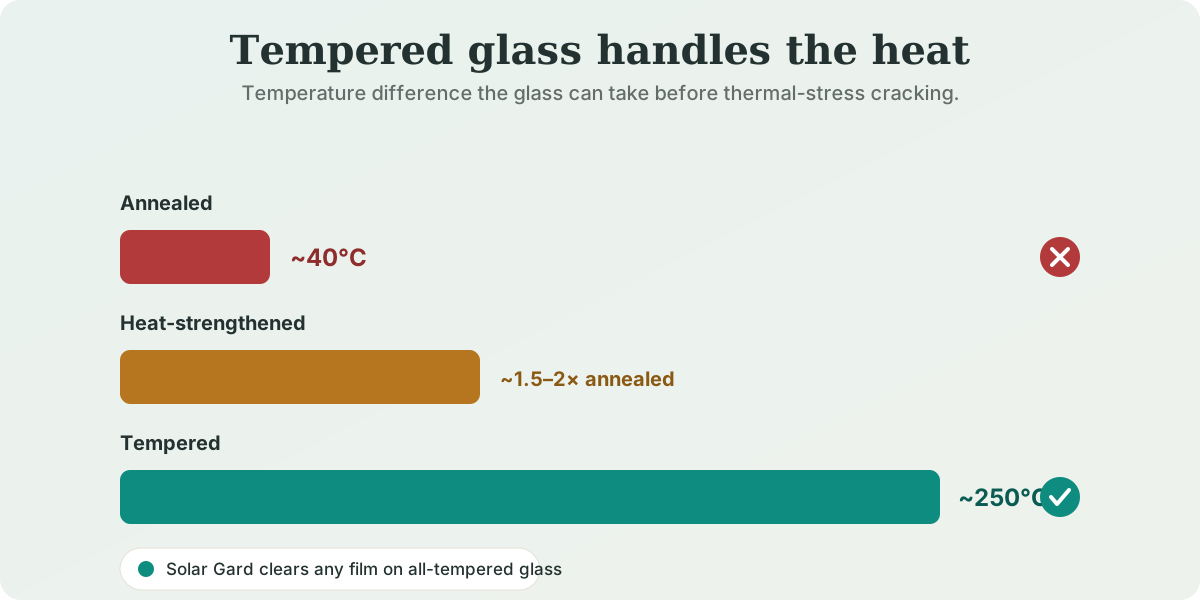
▲ Illustration — tempered glass tolerates a much larger temperature difference than annealed glass before thermal-stress cracking.
Yes. Tempered glass is generally the safest glass for window film because it resists thermal stress far better than ordinary annealed glass — Solar Gard clears any film on all-tempered constructions. You still follow the film's own limits (thickness, area, undamaged glass), avoid textured or frosted tempered glass (film won't stick), and check the warranty if it's a sealed double-pane. But the main worry — heat-stress cracking — is largely off the table on temper.
Guidance is compiled from manufacturer/industry technical sources and safety-glazing standards, cited in Sources.
The short answer
Yes — tempered glass is generally the safest glass for window film. It resists thermal stress far better than ordinary annealed glass, which is exactly the risk film adds. Solar Gard states that "any film may be applied to glass constructions consisting of all panes being tempered."[1] You still follow the film's instructions and mind the surface and warranty — but on temper, the big worry (heat-stress cracking) is largely off the table.
Why tempered is the low-risk case
Film makes glass absorb more solar heat, and the temperature difference between a sun-warmed center and a cooler, shaded edge is what cracks glass. How much difference the glass can take depends entirely on its type: annealed glass tolerates only about a 40 °C differential, heat-strengthened more, and tempered about 250 °C — so the industry view is that tempered "will never be exposed to excess thermal stress in architectural applications."[2] In strength terms, heat-strengthened glass is roughly 1.5–2× and tempered roughly 3–4× as resistant as annealed.[3] That margin is why solar film that needs a special approval on annealed glass is typically pre-cleared on all-tempered units.
What still applies on tempered glass
- Follow the film's own limits. Solar Gard still caps glass at 3/8" (10 mm) thick, sets area limits, and voids coverage on damaged glass or partial installs — "tempered" isn't a blank check.[1]
- Smooth still matters. Tempered glass can also be textured or coated. Film won't adhere to frosted or textured tempered glass, and Low-E rules still apply — see textured glass.[4]
- Warranty. If the tempered unit is a sealed double-pane, the window maker's warranty exclusion for film can still apply — see double-pane windows.
How to tell if your glass is tempered
By safety-glazing code, tempered (safety) glass carries a permanent manufacturer mark — etched, sandblasted or laser-etched — showing the maker, the standard and the type; in the US this is required by the safety-glazing standard the building code references.[5] Look for a small stamp in a corner of the pane. Other tells: tempered often shows slight surface distortion or "roller-wave," and it's the glass typically used where safety glazing is required — doors, glass near doors, shower and tub enclosures, and large low panes. (Standards differ by region — the UK uses BS EN 12150, so the mark's wording varies.)[6] If you can't find a mark and it matters (you're buying a solar film for a double-pane unit), treat the glass as unknown and confirm with the film maker.
A note on shower doors
Shower and tub enclosure glass is usually tempered — good for thermal stress — but it's often also textured or frosted for privacy, and film won't stick to that. On a smooth, clear tempered shower door, film can work; on a rain-glass or frosted one, it won't. The texture, not the temper, is the deciding factor there.
Not sure if your glass is tempered — or filmable?
Run your glass type, film type and goal through the checker for a source-backed answer.
Affiliate disclosure: HowToApplyNow may earn a commission from qualifying purchases made through links on this page, at no additional cost to you. Products are added only after we vet the program and the terms — and only when a specific product's own instructions support their use for this task.
FAQ
Is tempered glass safe for window film?
Yes — it's the lowest thermal-stress risk. Tempered glass tolerates roughly a 250°C temperature difference versus about 40°C for annealed, so Solar Gard clears any film on all-tempered constructions. You still follow the film's thickness and area limits and avoid textured or coated tempered glass.
How do I know if my glass is tempered?
Look for a permanent etched or sandblasted manufacturer mark in a corner of the pane — safety-glazing standards require it. Tempered glass is also typically used in doors, near doors, in shower/tub enclosures and large low panes, and may show slight surface distortion. If you can't confirm it and it matters, treat the glass as unknown and check with the film maker.
Can you put window film on a glass shower door?
If the glass is smooth and clear, usually yes — shower glass is normally tempered, which handles heat well. But shower doors are often textured or frosted for privacy, and film won't adhere to that. The texture, not the temper, is what decides it.
Can window film crack tempered glass?
It's very unlikely from thermal stress — tempered glass resists the heat difference film adds far better than annealed glass. The bigger cautions on tempered are following the film's thickness/area limits and not applying to damaged, textured or coated glass.
Sources
Research-first: Solar Gard's film-to-glass approval, an industry-association thermal-stress document and a glass-manufacturer strength reference for the numbers, plus safety-glazing standards for identification. US and UK marking standards are kept separate, not merged.
- Solar Gard — Film-to-Glass Guide (any film may be applied to all-tempered constructions; still caps thickness/area and excludes damaged glass or partial installs). solargard.com
- EWFA — Thermal Stress: Film-to-Glass Compatibility — industry (tempered ~250°C vs annealed ~40°C differential; tempered "will never be exposed to excess thermal stress in architectural applications"). ngs.inc
- Guardian Glass — Technical guidance — glass manufacturer (heat-strengthened ~1.5–2× and tempered ~3–4× the thermal-stress resistance of annealed). guardianglass.com
- Gila / Artscape — Install instructions (film will not adhere to frosted/etched/textured glass — applies to tempered glass too). gilafilms.com / artscape-inc.com
- SGCC / IBC safety glazing — Standards (permanent manufacturer mark required on safety/tempered glass: maker, standard, type). sgcc.org
- Purlfrost / BS EN 12150 — Identification — secondary/regional (UK marking standard for toughened glass; marks vary by region). purlfrost.com
One honest gap shown: 3M's own thermal-stress bulletin does not rank risk by glass temper — the "tempered is safer" conclusion rests on the EWFA figures and Solar Gard's approval matrix, which we attribute rather than overstate. Sources last reviewed: August 2026.