Static Cling vs. Adhesive Window Film
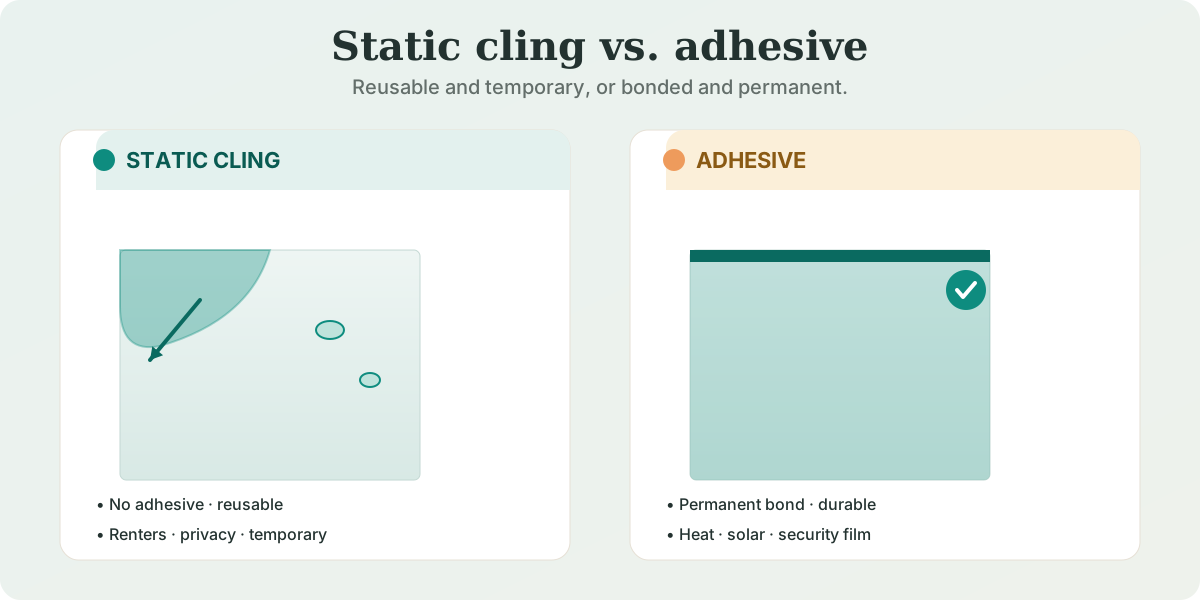
▲ Illustration — static cling holds by contact and peels off reusable; adhesive film bonds permanently.
Static cling holds to smooth glass with no adhesive — it's removable and reusable, best for renters and for temporary, privacy or decorative use. Adhesive film bonds permanently, lasts longer, and is the standard for heat, solar and security films. Both need smooth, flat glass — neither sticks to textured or frosted glass. Choose cling for flexibility, adhesive for durability and performance.
Guidance is compiled from manufacturer FAQs and a materials-maker technical source, cited in Sources.
At a glance
| Static cling | Adhesive | |
|---|---|---|
| Holds by | Cling to smooth glass — no adhesive[1] | Pressure-sensitive adhesive that bonds[1] |
| Reusable? | Yes — peel, re-wet, re-apply[2] | No — generally can't be reused once bonded[2] |
| Durability | Shorter-term; can lift in heat/humidity[3] | Longer-lasting, more permanent[3] |
| Best goals | Privacy, decorative, temporary[4] | Heat/solar control, security, permanent[4] |
| Removal | Peels off, no residue[4] | May need a blade + remover[2] |
How each one works
Static cling is a thin, flexible vinyl that holds to smooth, non-porous glass by close surface contact — despite the name, the mechanism is best described as a suction-like cohesive grip rather than "static electricity," and it's applied with a water-and-soap solution.[1] Adhesive film has a pressure-sensitive adhesive under a release liner; you apply it wet to float it into place, then it bonds and the bond cures over the following days.[2]
Reusable vs. permanent
This is the biggest practical difference. Static cling can be peeled off, re-wet and re-applied or reused — good for renters and seasonal changes.[2] An adhesive film, once it has bonded, generally can't be reused, and removing it may take a blade and an adhesive remover.[2] During installation the same rule applies: a bubbled cling film can be lifted and re-laid, while an adhesive film has to be squeegeed out then and there.[2]
Durability and where each performs
Adhesive film is the more durable, longer-lasting choice and stands up better to heat and humidity once bonded; static cling is more prone to edge-lift and can loosen in high heat or damp rooms.[3] That's why the two split by goal: solar/heat-control and security films are almost always adhesive (the metallized and ceramic constructions from the major makers are adhesive-only), while static cling is mostly decorative, privacy and frosted looks.[4] Static-cling solar-control films do exist, but they're a small niche — not the mainstream heat-rejection products — so if heat rejection is the goal, adhesive is the realistic pick.
Both need smooth glass
Neither type sticks to textured or frosted glass — both need a smooth, flat, clean pane.[5] If your glass is textured, that decides it before the cling-vs-adhesive question does — see window film on textured glass.
Which should you choose?
Pick static cling if you rent, want something temporary or seasonal, plan to reposition or reuse it, and mainly want privacy or a decorative look. Pick adhesive if you want it to last for years, need heat/solar control or security, or you're filming a high-traffic or high-sun window.[4] Whatever you choose, confirm it suits your glass first.
Which film suits your window?
Enter your film type, glass and goal for a source-backed recommendation.
Affiliate disclosure: HowToApplyNow may earn a commission from qualifying purchases made through links on this page, at no additional cost to you. Products are added only after we vet the program and the terms — and only when a specific product's own instructions support their use for this task.
FAQ
What's the difference between static cling and adhesive window film?
Static cling holds to smooth glass by contact with no adhesive, so it's removable and reusable. Adhesive film uses a pressure-sensitive adhesive that bonds to the glass, so it's more durable and permanent but generally can't be reused once removed. Both need a smooth, flat pane.
Is static cling window film as good as adhesive?
For privacy and decorative use, it's a great, flexible choice — and reusable. For durability and for heat, solar or security performance, adhesive is better: the major heat-control and security films are adhesive-only, and adhesive stands up to heat and humidity longer.
Can you reuse static cling window film?
Yes. Static cling can be peeled off, re-wet and re-applied or reused, which is why it suits renters and seasonal changes. Adhesive film generally can't be reused once it has bonded.
Which lasts longer, static cling or adhesive film?
Adhesive film. It's more durable and permanent and resists heat and humidity better once bonded, while static cling is more prone to edge-lift and can loosen in high heat or damp rooms.
Does static cling film work for heat or privacy?
It's excellent for privacy and decorative looks on smooth glass. For heat/solar control it's a small niche — the mainstream heat-rejection films are adhesive — so if cutting heat is the goal, adhesive is the realistic choice.
How do you remove static cling window film?
Because static cling has no adhesive, it usually peels off in one piece with no heat or chemicals and leaves no residue — and if you keep it clean and flat it can often be re-used. That’s the easiest “remove without damage” case. Adhesive film is the harder one — see our window film removal guide.
Is a window cling the same as a window decal?
Not quite. A static “cling” is a whole vinyl film that grips the glass by surface contact and lifts off repositionable; a “decal” is an adhesive-backed graphic or lettering that bonds to the glass like a sticker. If you want something you can move or reuse, choose a cling; a decal is meant to stay put.
Sources
Research-first: manufacturer FAQs for the reuse/durability/goal split, plus a materials-maker technical source correcting the common "static electricity" myth. No manufacturer publishes a side-by-side lifespan number, so durability is stated directionally, not as a fake figure.
- Gila — Home window film FAQ (static cling can be re-laid/reused; adhesive film cannot be reused once bonded; bubble handling differs). gilafilms.com
- Decorative Films — FAQs (static cling removable/reusable; adhesive "ideal for high-traffic areas where a more durable, longer-lasting product is required"; both need smooth glass; removal). decorativefilm.com
- Tekra — Static cling vs. low-tack adhesive white paper — materials manufacturer (cling is a plasticized vinyl gripping by contact, not static electricity; rated indoor, weaker in cold/condensation/high humidity). tekra.com
- 3M / Madico — Solar & security film data (heat-control and security films are adhesive/pressure-sensitive; high UV blocking; solar heat reduction up to ~86%). 3m.com / madico.com
- Artscape / Gila — Install instructions (both film types require smooth, flat glass; will not adhere to frosted/textured). artscape-inc.com / gilafilms.com
The "static electricity" explanation is widely repeated online; we attribute the corrected mechanism to the materials-maker source rather than to the household brands, which don't state it. Static-cling solar film is noted as a real but minor niche, not equivalent to adhesive heat-control film. Sources last reviewed: August 2026.