Frosted & Privacy Window Film: What Actually Works
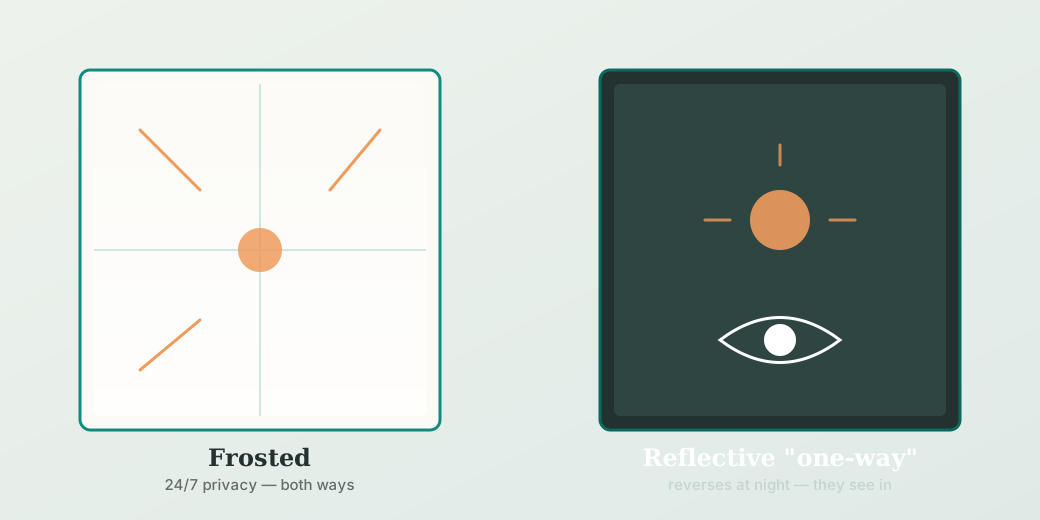
▲ Illustration — frosted film gives privacy both ways day and night; reflective “one-way” film reverses once interior lights are on.
Frosted film scatters light, so it obscures the view both ways, 24/7 — but you can't see out either. Reflective “one-way” film is different: it only works while your side is darker, and reverses at night when your lights are on, letting outsiders see in. Frosted still lets plenty of daylight through (roughly 60–90%), applies to smooth glass only with a simple wet method, and — depending on cling vs adhesive — can be removable and reusable.
Guidance is compiled from manufacturer installation guides and industry sources, cited in Sources.
Frosted vs one-way “mirror” privacy film — the honest difference
Most privacy-film confusion comes from treating two very different products as one. They work on opposite principles, and one of them famously fails at night.
| Frosted (light-scattering) | Reflective “one-way” (mirror) | |
|---|---|---|
| How it works | Translucent; scatters light so the view blurs[4] | Mirror effect on whichever side is brighter[5] |
| Daytime privacy | Yes | Yes (exterior is brighter)[5] |
| Night privacy (lights on) | Yes — unchanged | No — it reverses, outsiders see in[5] |
| Can you see out? | No (blurred both ways) | Yes, in daylight |
Frosted film "obscures the view from both sides by scattering light … it provides 24/7 privacy but blocks the ability to see through the glass in either direction, day or night."[5] Reflective one-way film instead "creates a mirror effect on whichever side is brighter." During the day the exterior is far brighter, so it blocks outside-in views — but at night, with interior lights on, "the film's mirrored effect flips … anyone on the outside can see in with perfect clarity."[5]
Does frosted film still let light in?
Yes — that's its main advantage over curtains or blinds: privacy and daylight. How much light depends on the style. Lighter “lite frost” transmits around 90% of visible light, while traditional frosted blocks detailed views while still transmitting roughly 60–70%.[5] So the room stays bright; the view just turns to a soft glow.
Static cling or adhesive frosted film — which to pick
Frosted film comes in both forms, and the choice mirrors the wider static cling vs adhesive decision. Static cling holds by surface contact with no glue, peels off with no residue and can often be reused — good for renters and temporary privacy; it lasts around 2–5 years. Adhesive bonds permanently, is more durable, and lasts roughly 7–15 years.[5] For a rental or a seasonal change, cling; for a permanent install, adhesive.
How to apply frosted window film (wet method)
Frosted film goes on with the standard wet method — the same technique as the bubble-free application guide, applied to the inside of the glass.
Wet the glass and both sides of the film
Spray the application solution (water with a little baby shampoo or mild detergent) onto the glass and both sides of the film so it can slide into place.[1]
What glass can you use it on?
Frosted film needs smooth, non-textured glass.[3] It works on "windows, glass doors, shower enclosures, and mirrors."[5] Two cautions:
- Already-textured or frosted glass won't take it — there's nothing smooth for the film to grip (and that glass is usually a privacy surface already). See window film on textured glass.
- Sealed double-pane units: frosted is generally fine, but avoid dark reflective films on them — the extra heat they absorb raises thermal-stress risk. See double-pane windows and can film crack glass?[5]
Removing frosted film later
Removal depends on the type. Static-cling frosted film peels off cleanly with no residue; adhesive film takes more effort and may need a solvent or scraping, though quality film "typically remove[s] without window damage."[5] Either way, match the method to your glass — the full process is in our window film removal guide.
Which privacy film suits your window?
Enter your film type, glass and goal for a source-backed recommendation.
Affiliate disclosure: HowToApplyNow may earn a commission from qualifying purchases made through links on this page, at no additional cost to you. Products are added only after we vet the program and the terms — and only when a specific product's own instructions support their use for this task.
FAQ
Does frosted window film give privacy at night?
Yes. Frosted film scatters light, so it obscures the view from both sides 24/7 — day or night, lights on or off. This is different from reflective “one-way” mirror film, which only works while the filmed side is darker and reverses at night when interior lights are on.
Can you see out through frosted window film?
No. Frosted film blurs the view in both directions — it blocks people seeing in, but you can't see out clearly either. If keeping your view matters, a reflective or tinted film behaves differently, but those carry the day/night limitation and other trade-offs.
Does frosted film make the room dark?
No — that's its main advantage over curtains or blinds. Frosted film still lets natural light through while blocking the view: lighter “frost” styles transmit around 90% of visible light, and traditional frosted roughly 60 to 70%.
Is frosted window film removable?
It depends on the type. Static-cling frosted film peels off cleanly with no residue and can often be reused. Adhesive frosted film bonds more permanently and may need a solvent or scraping, though quality film usually comes off without damaging the glass.
What surfaces can you apply frosted film to?
Smooth, non-textured glass only — windows, glass doors, shower enclosures and mirrors. It won't adhere to textured or already-frosted glass. On sealed double-pane units, avoid dark reflective films, which raise thermal-stress risk.
Sources
Research-first: manufacturer installation guides for the wet method and cure, and an industry guide for the day/night physics, light-transmission ranges and cling-vs-adhesive lifespans. The cure-time range is shown as a genuine source conflict rather than a single invented number.
- Gila (Eastman) — Official decorative film installation instructions, PDF (razor-scrape prep; cut 1" oversized; wet glass and both sides of film; squeegee from centre; cures ~7–10 days). gilafilms.com
- Gila — Home window film FAQ & installation hub. gilafilms.com
- Purlfrost — How to apply window film — manufacturer method (wet method; cut 10–20 mm oversized; smooth non-textured glass only; avoid silicone/wax cleaners; cure a few days to several weeks). purlfrost.com
- Window Film Depot — Window frosting film complete guide (what frosted film is; static cling vs adhesive; VLT ranges; surfaces; removal). windowfilmdepot.com
- Window Film Depot — One-way window film, day & night (reflective film reverses at night with interior lights on; frosted gives 24/7 both-way privacy). windowfilmdepot.com
Manufacturers don't publish a single cure time or lifespan figure, so those are given as ranges and attributed. The day/night behaviour is the product's defining honesty point and is cited directly. Sources last reviewed: September 2026.